Directional Microphones in Hearing Aids: How They Improve Speech in Noise
Directional microphones are one of the most important technologies in modern hearing aids for improving speech understanding in noisy environments. By focusing on sounds from a specific direction—typically in front of the wearer—they can improve the signal-to-noise ratio (SNR) and make speech easier to follow.
Beamforming Principles
Beamforming is the core technology behind directional microphones. Modern hearing aids use two or more microphones separated by a small distance. By analyzing the tiny differences in arrival time and level between these microphones, the hearing aid's processor can determine the direction of incoming sounds.
The processor then applies specific gain and delay values to create a spatial filter—or "beam"—that emphasizes sounds arriving from the front while attenuating sounds from the sides and rear. This spatial filtering is what creates the directional pickup pattern.
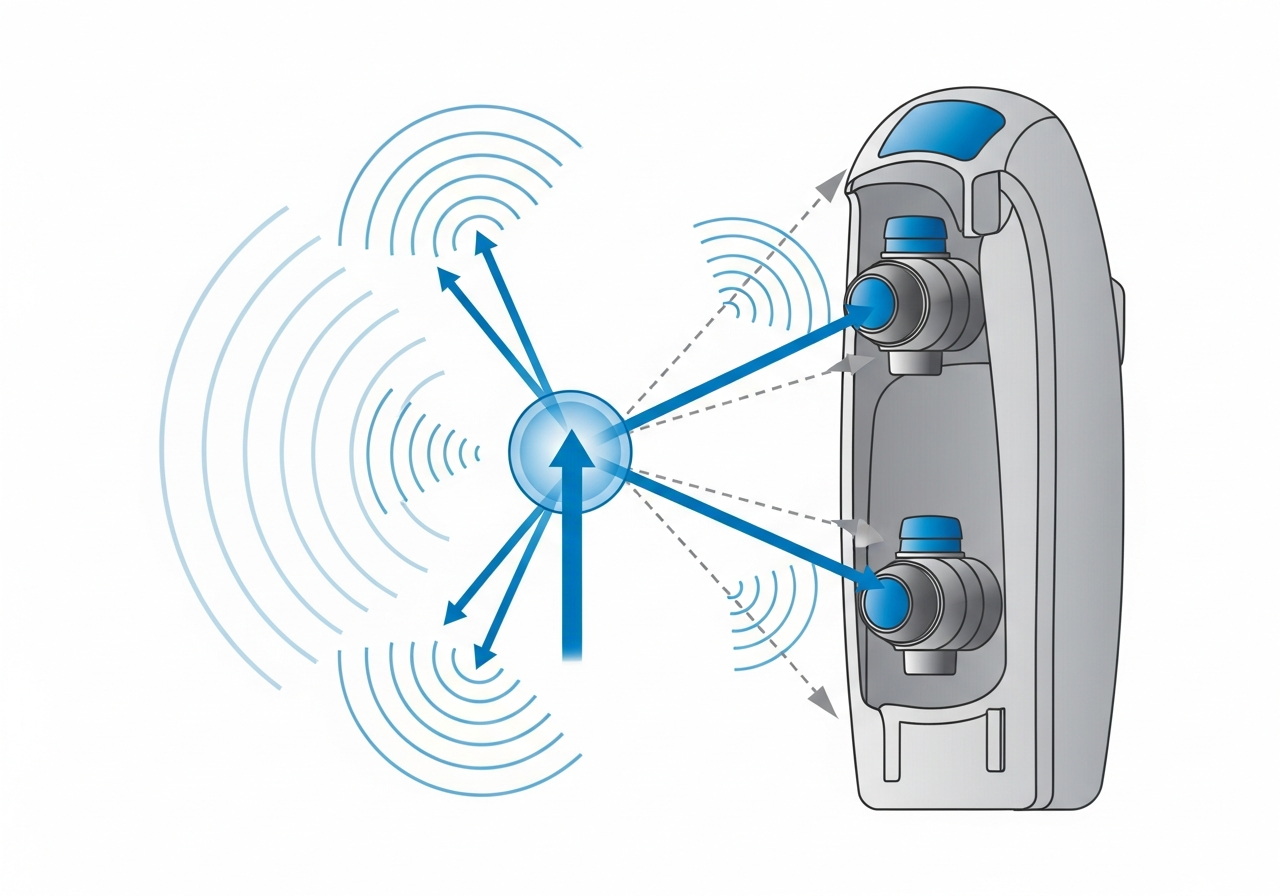
The result is an SNR improvement of approximately 2–5 dB depending on the environment, microphone spacing, and processing algorithm. While this sounds modest, even a 2–3 dB improvement can meaningfully increase speech intelligibility in noise.
Fixed vs Adaptive Directional Microphones
Fixed directional microphones use a static polar pattern—typically a hypercardioid or supercardioid shape—that always points forward. They are simple and predictable: sounds from the front are amplified, sounds from behind are attenuated. Fixed systems provide consistent performance but cannot adjust to changing noise conditions.
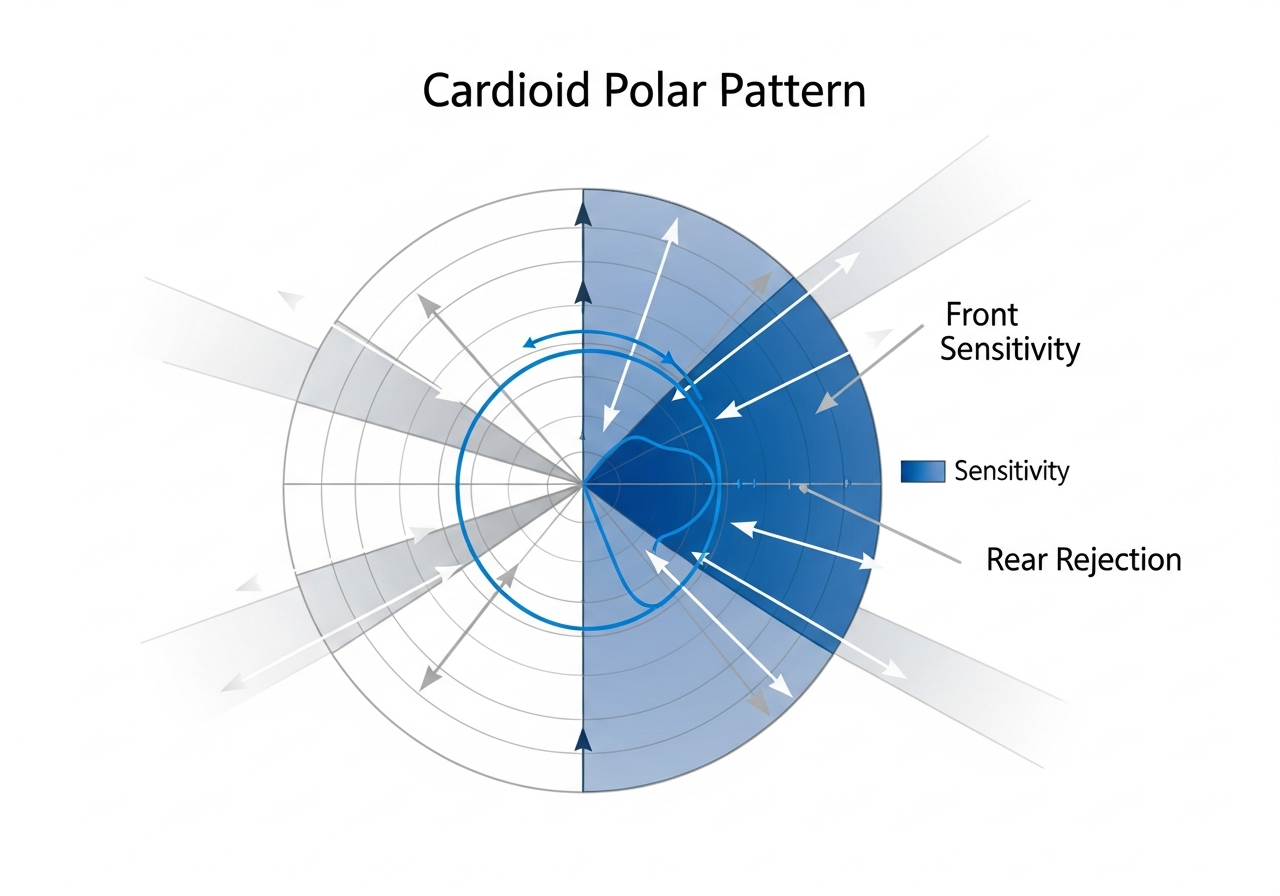
Adaptive directional microphones continuously analyze the acoustic environment and automatically adjust the null points (areas of maximum attenuation) to minimize the dominant noise source. If noise shifts from behind to the side, the hearing aid moves the null to follow it. This can provide better real-world performance in dynamic environments like restaurants or social gatherings.
Most modern hearing aids use adaptive systems, often combined with additional noise reduction algorithms. Some premium devices use binaural beamforming, which coordinates the microphones across both ears to create an even narrower beam and better noise rejection.
When Directional Microphones Work Best
Directional microphones deliver the greatest benefit under specific acoustic conditions:
- One dominant talker in front: The ideal scenario. When the person you want to hear is directly ahead, the directional beam is maximally effective.
- Noise primarily from behind or the sides: Directional mics attenuate sounds arriving from non-frontal directions, so spatially separated noise is handled well.
- Low reverberation: In acoustically treated rooms or outdoors, sound arrives directly with few reflections, allowing the directional system to distinguish speech from noise accurately.
- Close distance to the talker: The speech signal must be strong enough relative to noise. At short distances (within 1–2 meters), the direct speech signal is dominant.
In these ideal conditions, directional microphones can improve SNR by 3–5 dB, translating to a significant improvement in speech recognition scores—often 20–30 percentage points on word recognition tests.
Limitations in Reverberant Environments
Reverberation is the biggest challenge for directional microphone systems. When sound reflects off walls, ceilings, floors, and furniture, it arrives at the hearing aid from many directions simultaneously. This "smears" the spatial cues that directional microphones rely on.
In highly reverberant spaces—like large open restaurants, places of worship, or lecture halls with hard surfaces—the directional benefit can shrink to less than 1 dB. The reflected copies of both speech and noise arrive from all directions, making it impossible for the directional system to separate them spatially.
Other limitations include:
- Multiple talkers from different directions: When the person of interest isn't directly ahead—for example, at a round dinner table—directional focus may attenuate the desired speaker.
- Wind noise: Directional microphone configurations can be more susceptible to wind noise than omnidirectional modes.
- Distance: When the talker is far away, the direct signal is weak relative to room noise and reverberation. Directionality alone cannot compensate for the inverse square law loss of signal level.
- Low-frequency noise: Directional benefit is typically greater at higher frequencies. Low-frequency noise is harder to attenuate directionally due to the small spacing between hearing aid microphones.
Frequently Asked Questions
How much do directional microphones improve hearing in noise?
In favorable conditions (one talker in front, noise from behind, low reverberation), directional microphones can improve the signal-to-noise ratio by 3–5 dB. This translates to roughly 20–30 percentage points improvement on speech recognition tests. In difficult environments like restaurants, the benefit may be smaller—around 1–3 dB.
What is the difference between directional and omnidirectional microphones?
Omnidirectional microphones pick up sound equally from all directions, which is ideal in quiet environments or when you want to hear everything around you. Directional microphones focus on sounds from a specific direction (usually the front) and reduce sounds from other angles. Most modern hearing aids switch automatically between modes based on the environment.
Do directional microphones work in restaurants?
Restaurants are challenging for directional microphones because of high reverberation, multiple competing talkers, and noise from all directions. Directional mics still provide some benefit, but it is reduced compared to quieter or less reverberant settings. For difficult restaurant situations, a remote microphone placed near the talker often provides a much larger improvement.
What is adaptive directional technology?
Adaptive directional technology continuously monitors the acoustic environment and automatically adjusts the microphone's null points to minimize the dominant noise source. Unlike fixed directional patterns, adaptive systems can track moving noise sources and adjust in real time, providing better performance in dynamic listening situations.
Are directional microphones better than remote microphones?
They solve different problems. Directional microphones are built into the hearing aid and work automatically. Remote microphones are separate devices placed near the talker and can provide much larger SNR improvements (10–15 dB vs 3–5 dB). Remote mics are more effective in very noisy or reverberant environments, but require setup and cooperation from the speaker.
Explore More Topics
Scott Johnson
Hearing Technology Analyst
Scott Johnson analyzes hearing aid signal processing and speech-in-noise performance. His work focuses on signal-to-noise ratio (SNR), directional microphones, and real-world hearing aid technology evaluation.
Related Pages
Related Articles
Stay Updated on Hearing Aid Research
Get evidence-based hearing aid comparisons and new analysis delivered to your inbox. No spam, unsubscribe anytime.
Watch: How Directional Microphones Work in Hearing Aids
Learn how directional mics reduce noise from behind and to the sides, adding 2–5 dB of SNR benefit when conditions are right.
Covers polar patterns, beamforming, adaptive directional modes, and real-world limits.